01 · Earth to space
Stand up the network
A Quorum node was installed on a GOMX-4 satellite. The team confirmed Earth and satellite ledgers were in sync, then completed a basic token transfer from the ground station into orbit.
SpaceBridge was flown under the belief that a future where Ethereum settles between satellites is fundamentally more exciting than one where every payment still has to come home. Bank-led Ethereum, sent from one CubeSat to another.
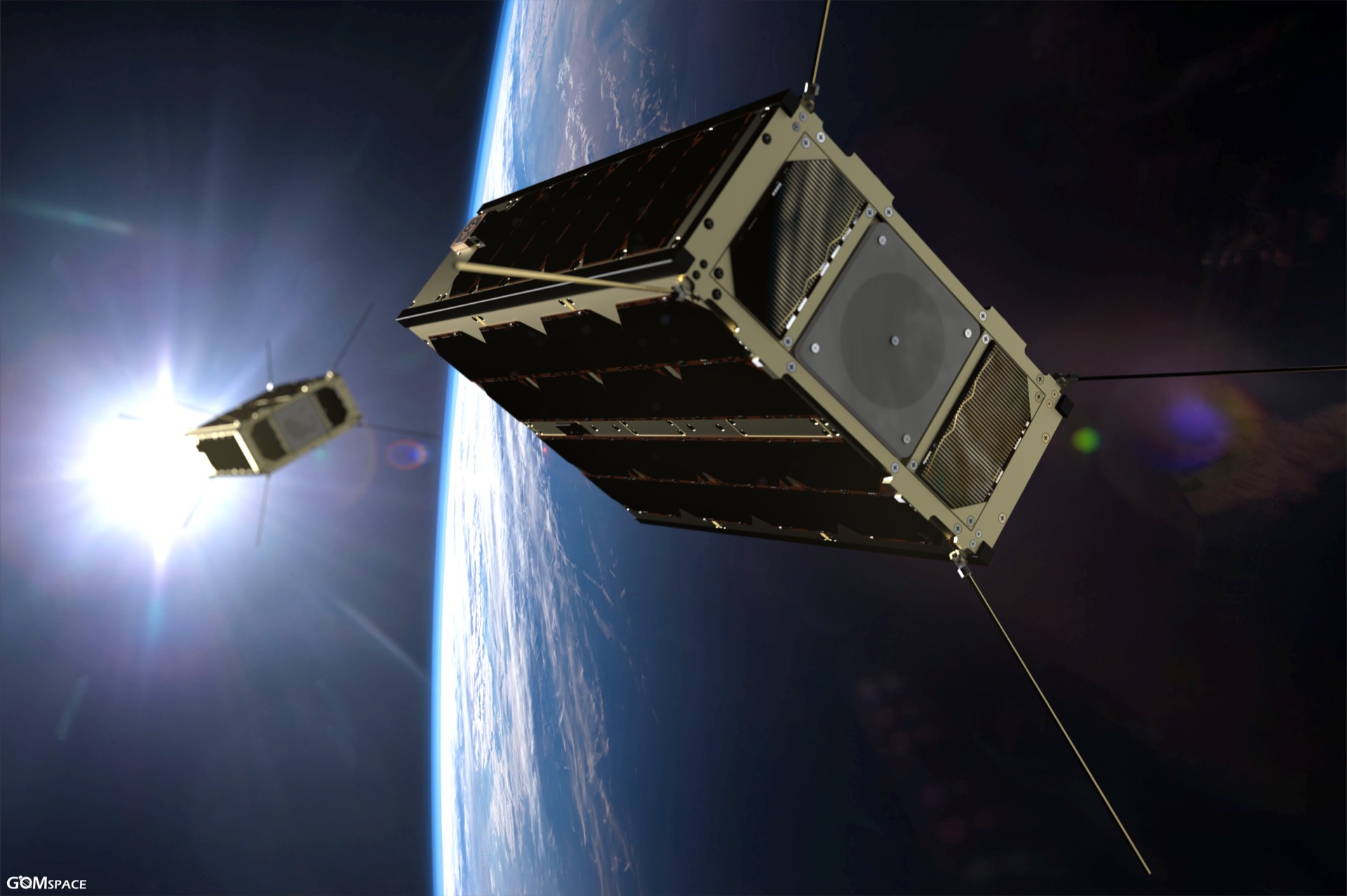
GomSpace · GOMX-4A and GOMX-4B
J.P. Morgan · SpaceX · $SPCX
In the SpaceBridge write-up, J.P. Morgan named SpaceX as the private capital filling low Earth orbit — the same name that now trades on-chain as $SPCX. The 2021 demo proved a ledger could fly. SpaceX funds and launches the constellations that would actually use it.
“companies such as SpaceX and Blue Origin continue to expand the role of private enterprise” · Kinexys, 2021
The test sequence
Reported by J.P. Morgan and GomSpace. The stack was a memory-tight Consensys Quorum build — an Ethereum client small enough for a CubeSat, first proven on a Raspberry Pi.
01 · Earth to space
A Quorum node was installed on a GOMX-4 satellite. The team confirmed Earth and satellite ledgers were in sync, then completed a basic token transfer from the ground station into orbit.
02 · Tokenized value
They pushed a familiar Ethereum standard — an ERC-20 contract — to represent tokenized value on the same network, then watched the ledger hold state as the spacecraft flew out of range of the Earth station.
03 · Two nodes in space
The decisive test: a transaction between two LEO satellites. It validated a decentralized path where communication with Earth is not required — the seed of a data-versus-payment marketplace in orbit.
From the J.P. Morgan article
The team wrote that a space payments system was worth thinking about — but only after they proved a ledger could survive orbit, loss of signal, and a hop between two satellites.
The brief
“We decided there was enough here to begin thinking about what a space payments system would look like over the long term. But first we needed to prove it was even possible.”Tyrone Lobban · Head of Blockchain Launch, J.P. Morgan
Memory, keys, and Raspberry Pis
“One of the challenges in working with devices is the memory constraints. This is amplified on a satellite because much of the memory is reserved as a backup for the satellite itself — not for running blockchain software.”Tyrone Lobban · J.P. Morgan
A protocol between providers
“Blockchain can facilitate a common communication and payments protocol between satellite providers, which could underpin the exchange of services between satellites, for example in the provision of continuous broadband links or to capture images and weather data using peer-to-peer autonomous contracts.”Tyrone Lobban · J.P. Morgan
Horizon 3 payments
“Space exploration is becoming increasingly well-funded and presents an exciting opportunity to deploy financial technology to create a brand-new payments infrastructure leveraging blockchain.”Rob Matles · Head of FLARE, J.P. Morgan
Recorded demonstration
Follow the Earth-station to LEO to LEO path: smart contracts, a synced ledger, and a simulated purchase of satellite imagery — the narrative J.P. Morgan built around user Keerthi procuring imaging data.
Video: local recording of the SpaceBridge demonstration · narrative and UI from J.P. Morgan, Payments in Space
The vehicles
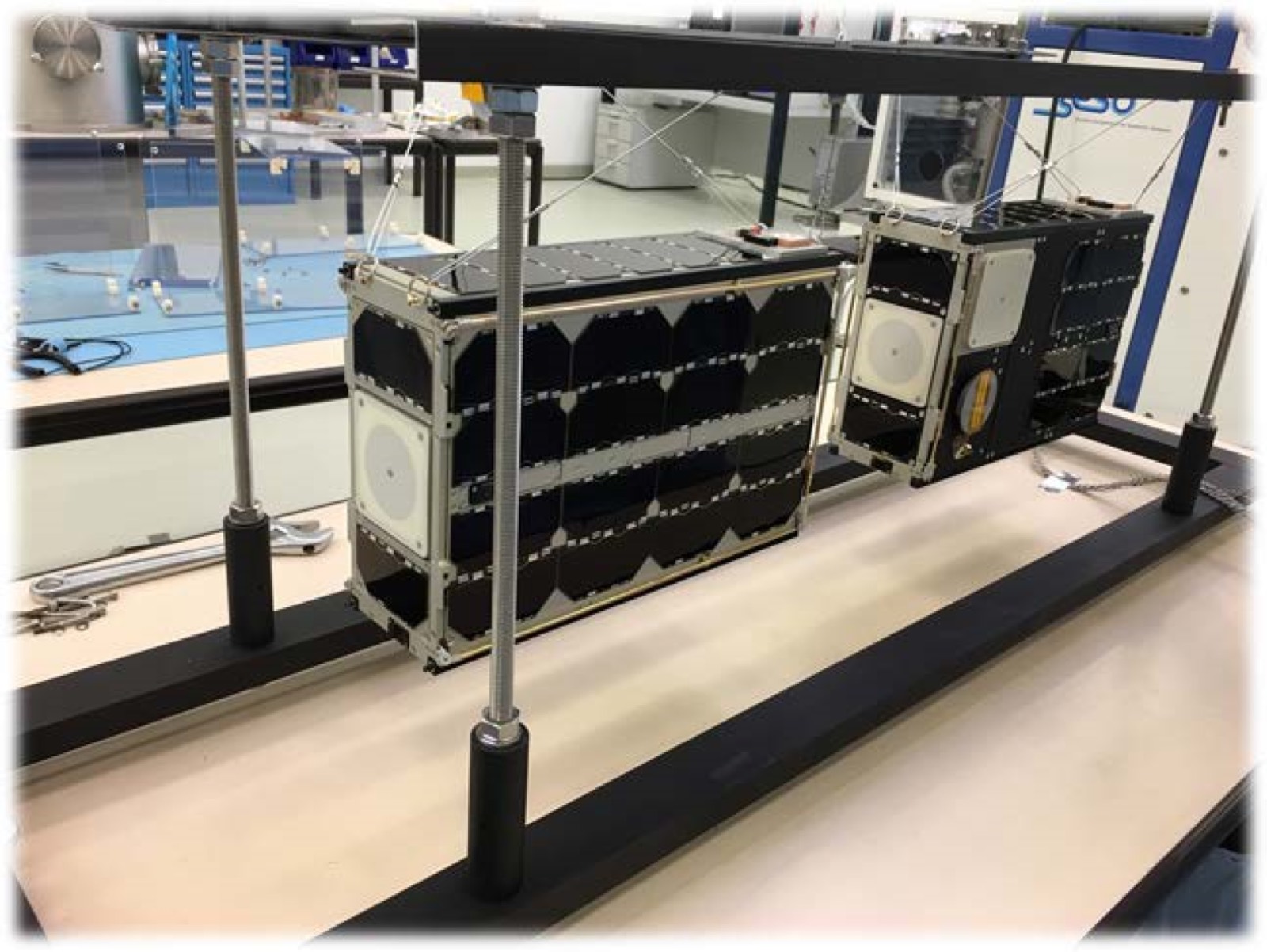
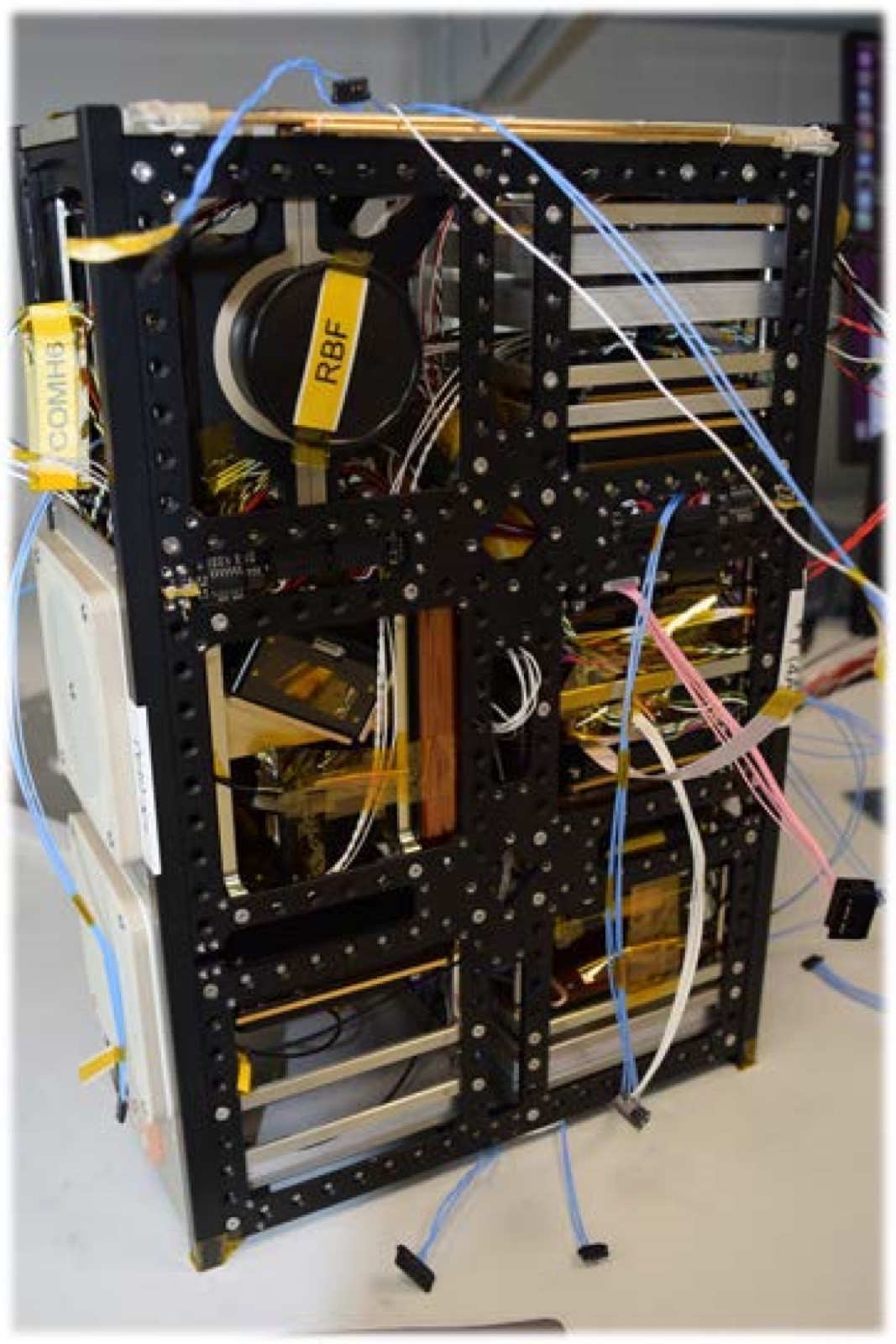
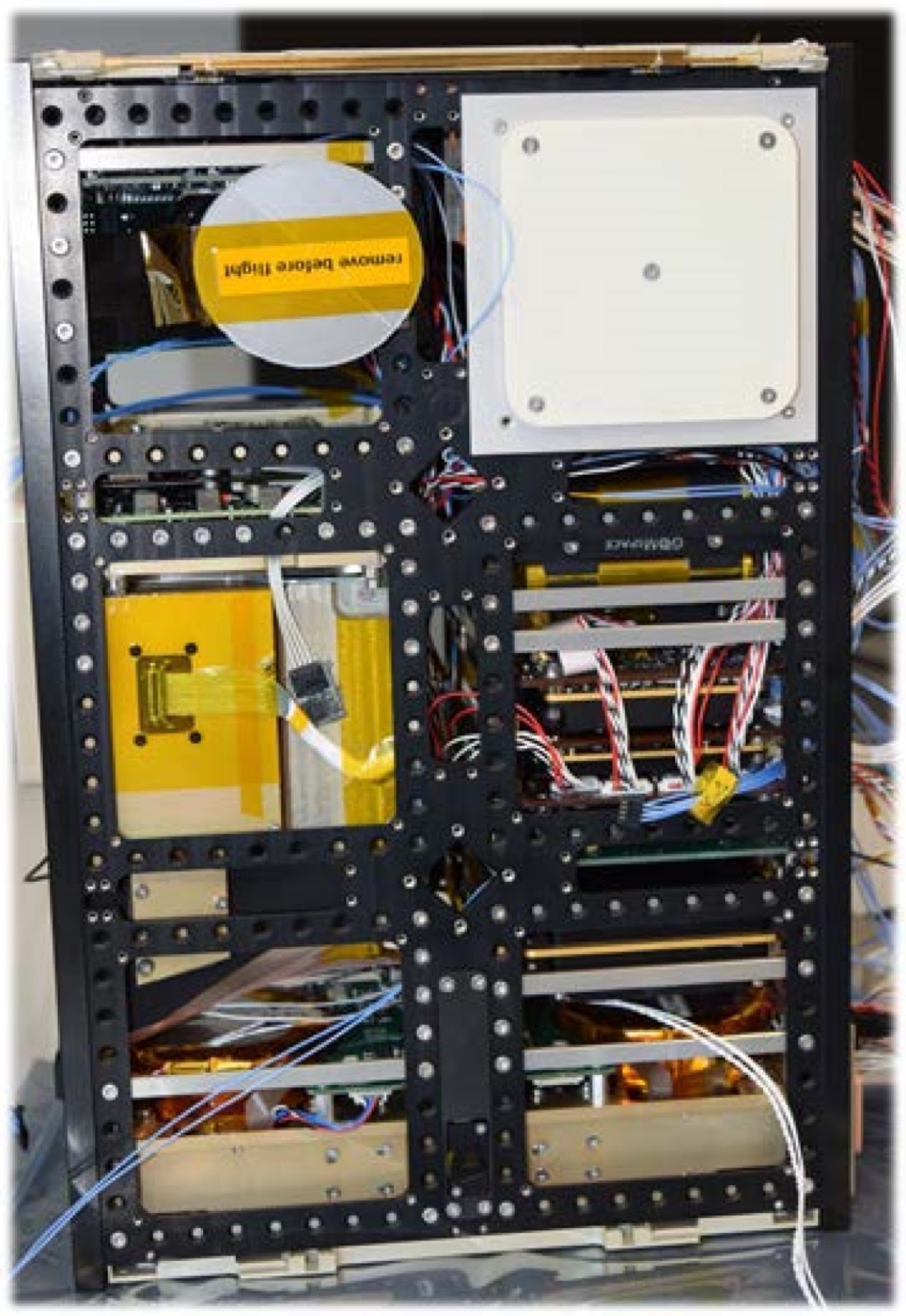
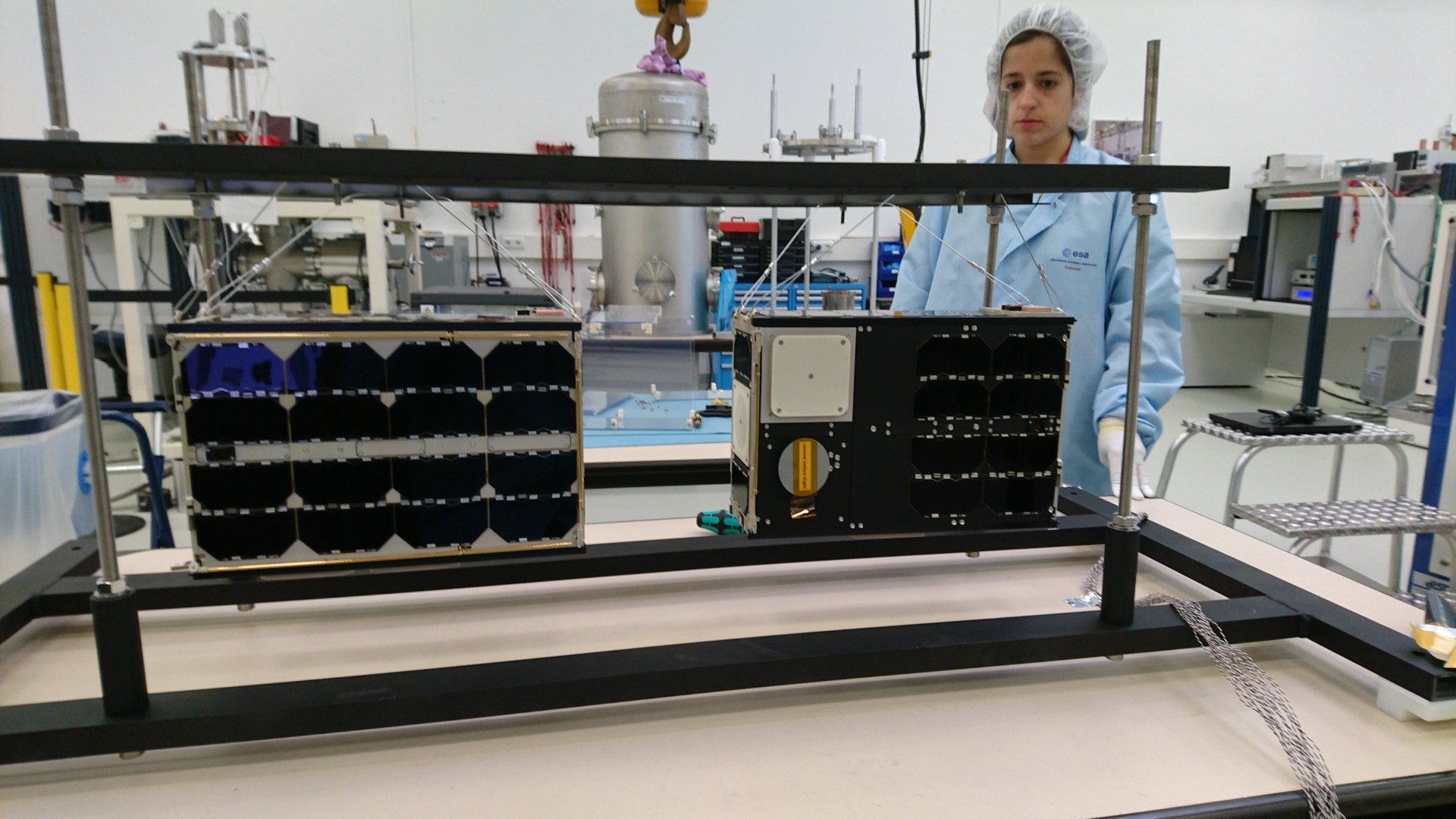
A 6U CubeSat built by GomSpace in Aalborg, Denmark, and owned with the Danish Defence. Launched 2 February 2018 on a Long March 2D. NORAD 43197. Designed for Arctic surveillance — AIS and ADS-B — and, critically, inter-satellite links that later carried a bank’s blockchain.
Nanosats Database records that GomSpace and J.P. Morgan used the GOMX-4 pair for an in-orbit demonstration of tokenized value transfer: the world’s first bank-led blockchain transaction in space, executed via smart contracts between satellites.
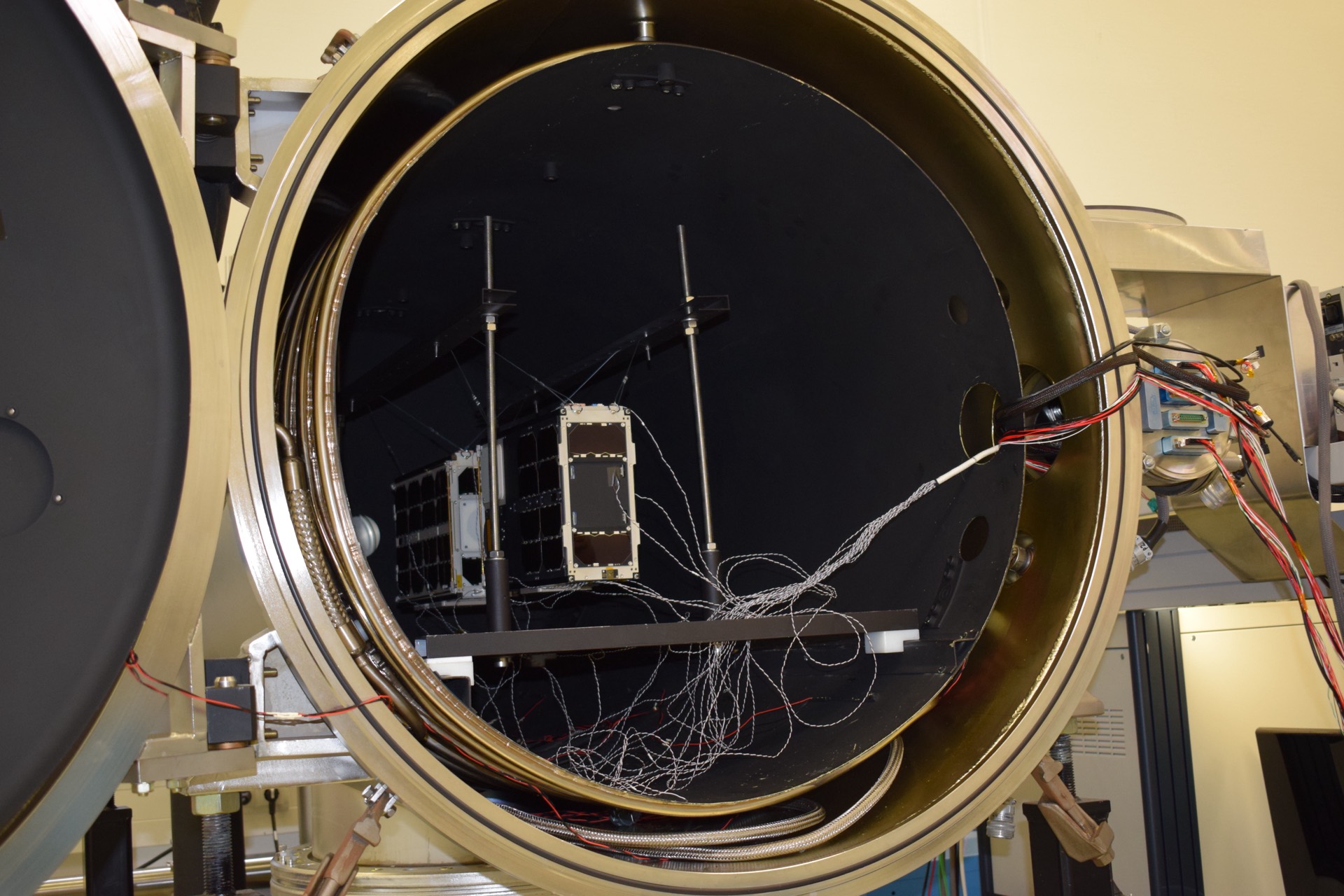
Image: ESA / GomSpace · CubeSats in the Mechanical Systems Lab · ESA
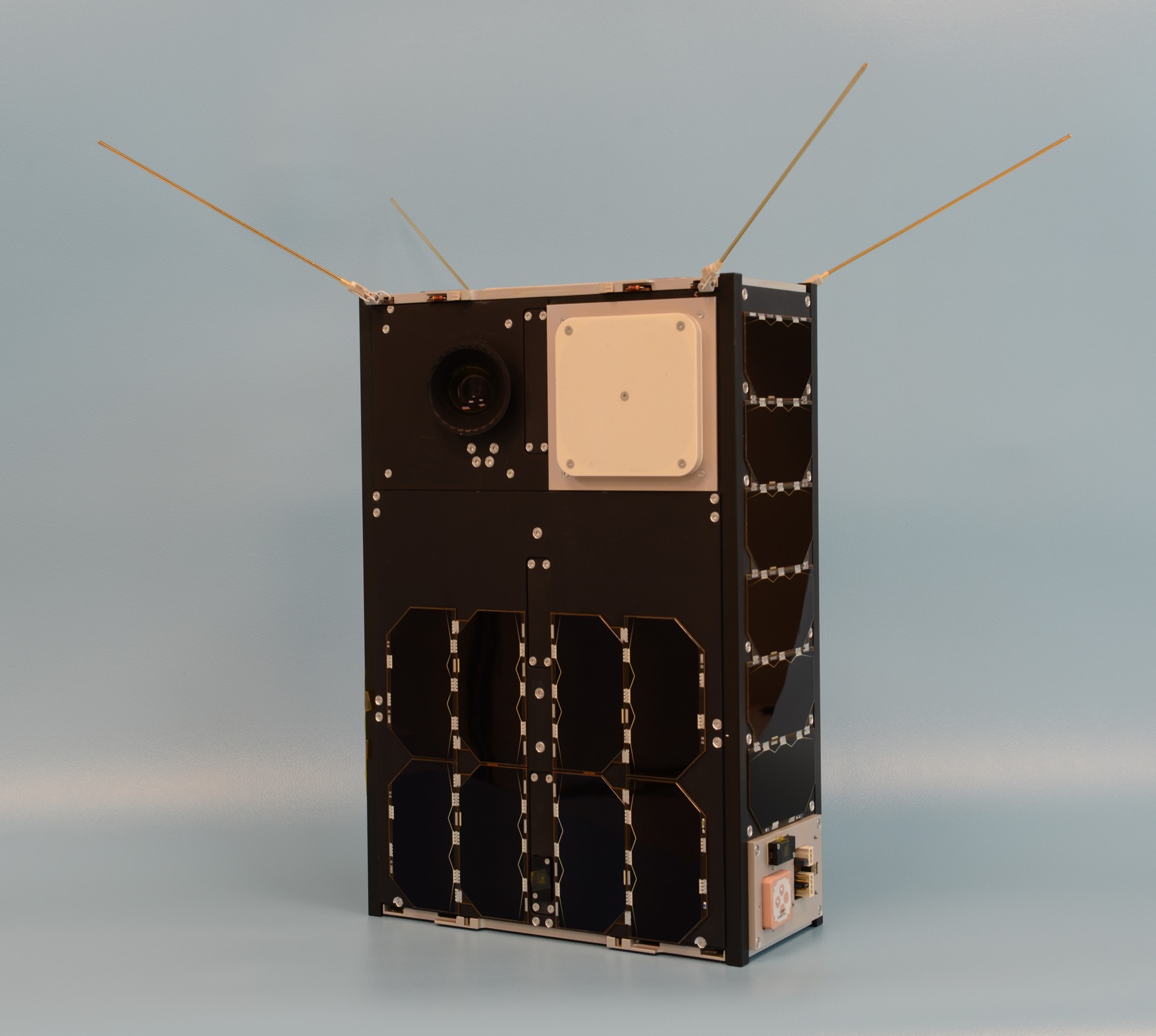
Image: ESA · GomX-4B CubeSat
The twin
ESA’s technology CubeSat, the twin of GOMX-4A, flew HyperScout hyperspectral imaging, NanoSpace cold-gas propulsion, and the same inter-satellite radios. The pair was designed to talk across thousands of kilometres — the physical layer a payments protocol would later sit on.
“We are proud to have supported J.P. Morgan as they explored this novel use case of a space-based payment infrastructure utilizing blockchain technology,” said Niels Buus, then CEO of GomSpace.
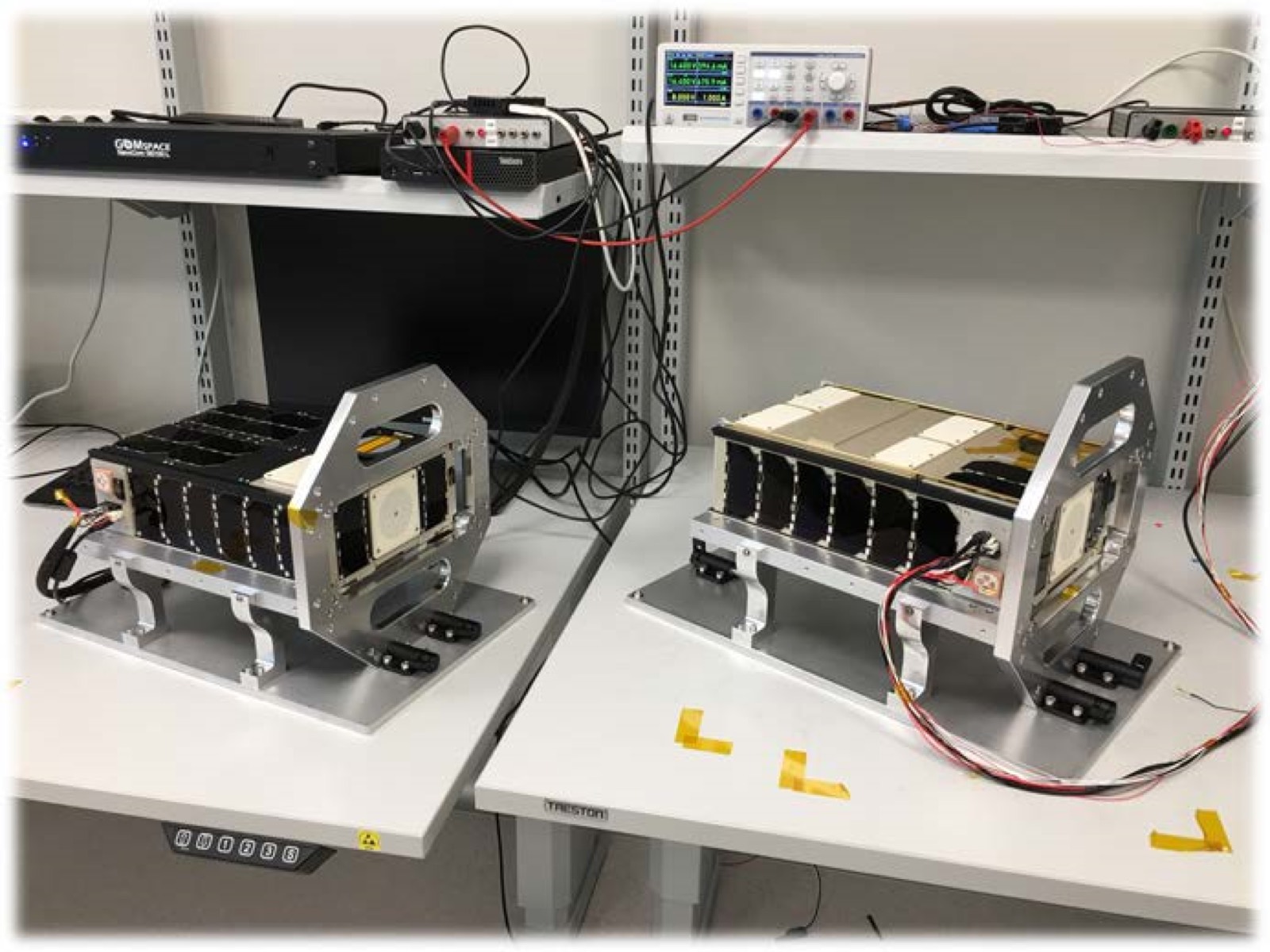
Reconfigurable flight hardware
GomSpace could run the demonstration because GOMX-4 was still flying and still programmable. Rapid in-orbit demos — including a bank’s blockchain — became a service on nanosatellites that had already survived launch.
Image: GomSpace via Nanosats Database
Launching the cosmos economy
SpaceBridge is a prototype, discussed by J.P. Morgan for information only. It is not a live product. The thesis: satellites pay each other for work, then sync the ledger when they next see Earth.
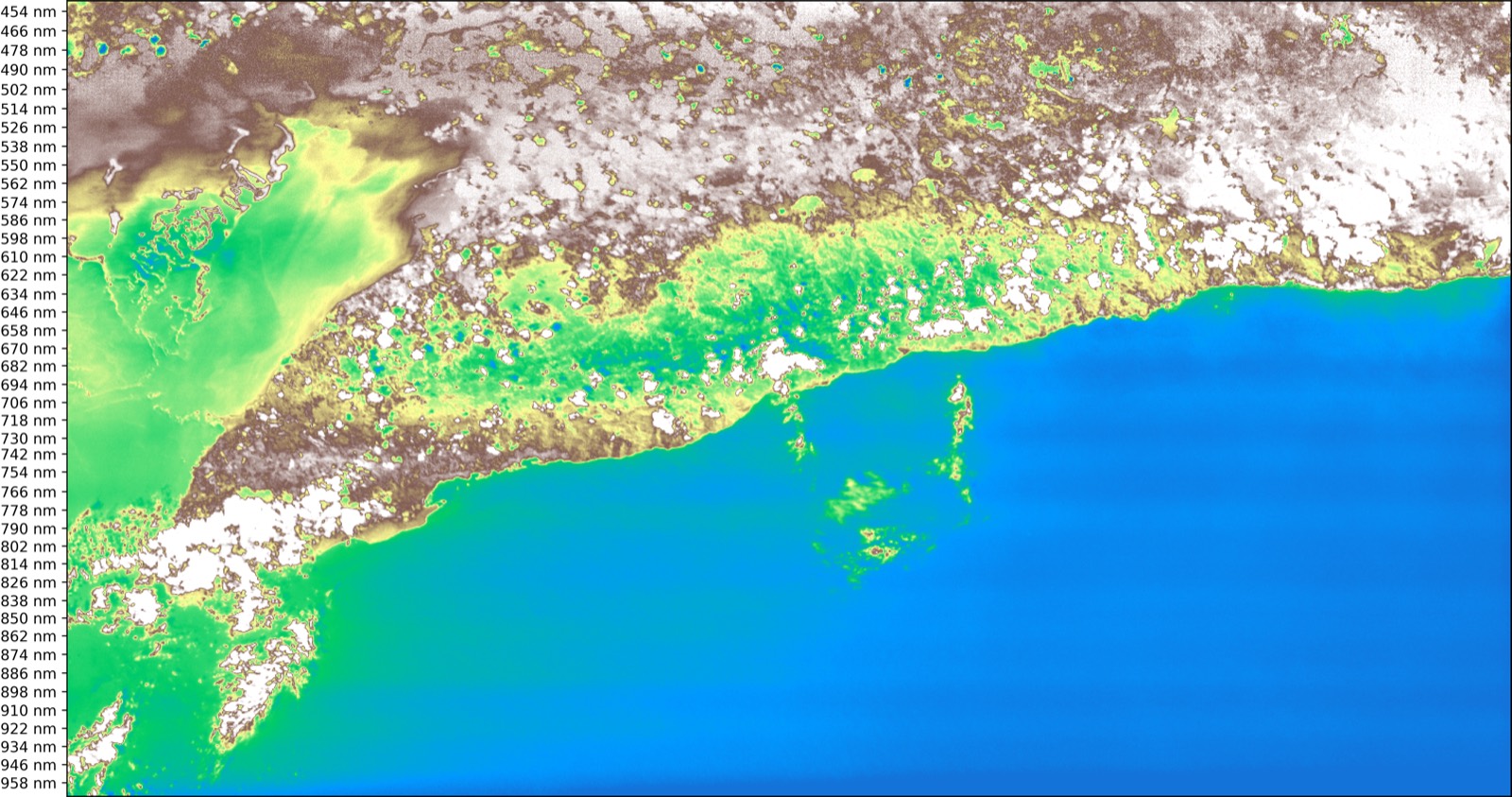
Capture and sell imagery, radar, and electromagnetic scans. The SpaceBridge demo story is a user on Earth buying a satellite image.
Image: ESA · HyperScout first light, GOMX-4B
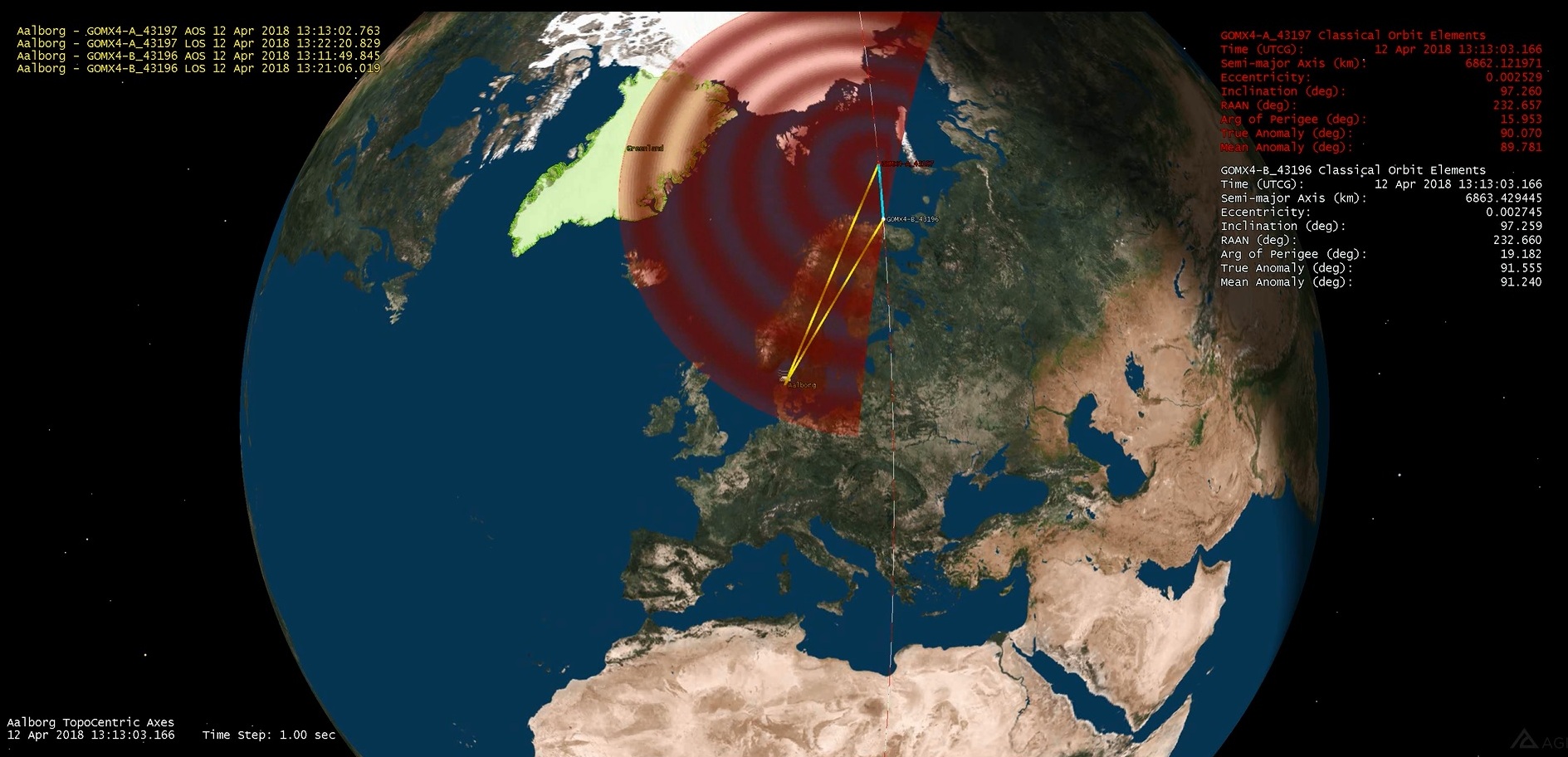
When a satellite is out of range, it still transacts. When it returns, the Earth station ingests the off-world ledger.
Image: ESA / GomSpace · Linked CubeSats, 12 April 2018

Kinexys lists continuous broadband handoffs across providers as a natural fit for a shared payments protocol in orbit.
Image: SpaceX · spacex.com

From tourism payments off-planet to multi-constellation carbon and weather accounting — the uses J.P. Morgan sketched for a space ledger.
Image: NASA / Apollo 17 · Wikimedia Commons
Independent archive
This site restates public reporting. SpaceBridge is a prototype. Satellite-to-satellite payments are not a live J.P. Morgan product. Every photograph and paragraph below is attributed to its origin.
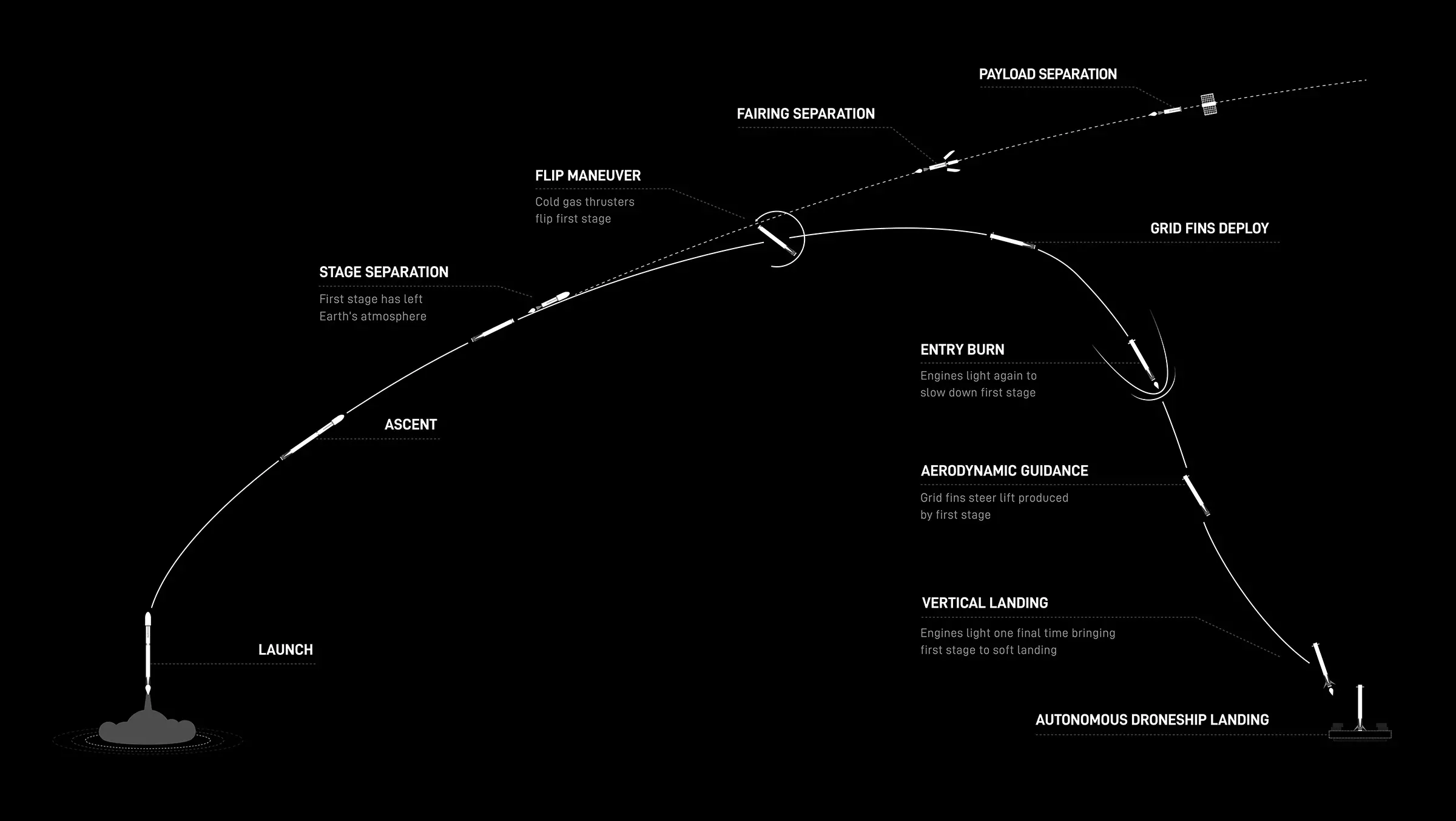
Image: SpaceX · Falcon 9 autonomous droneship
Primary sources
Click through. Nothing here is unsourced. Visual design follows the public SpaceX website (D-DIN, void black, ghost buttons, full-bleed photography) as a stylistic reference only.
01 · J.P. Morgan
Official demo page — Earth station, LEO, LEO, the Keerthi imaging narrative, and the Ethereum-based network description.
jpmorgan.com/kinexys/…/payments-in-space02 · J.P. Morgan
The engineering write-up: Quorum on a CubeSat, ERC-20, loss-of-signal, and the satellite-to-satellite transfer.
jpmorgan.com/technology/news/blockchain-in-space03 · GomSpace · 26 Feb 2021
Manufacturer confirmation of the in-orbit demonstration and Niels Buus on space-based payment infrastructure.
gomspace.com · GOMX-4 constellation04 · Nanosats Database
NORAD 43197, 6U, launch, reentry, partners, and the blockchain IOD note with photo sources.
nanosats.eu/sat/gomx-4a05 · European Space Agency
Twin 6U CubeSats, inter-satellite links out to 4,500 km, HyperScout, and thermal-vacuum testing.
esa.int · GomX-4B06 · SpaceX · visual reference
Type, color, section rhythm, and several photographs. This archive is not a SpaceX site and is not affiliated with SpaceX.
spacex.comIndependent educational showcase. Not affiliated with SpaceX, J.P. Morgan, GomSpace, ESA, Consensys, or Ethereum. SpaceBridge is a prototype discussed by J.P. Morgan for information purposes only and is not contemplated as a live product. Satellite-to-satellite payments are not offered as a service. Quotes and facts are condensed from the linked pages. Imagery remains copyright of the credited owners and is shown here with visible attribution.